











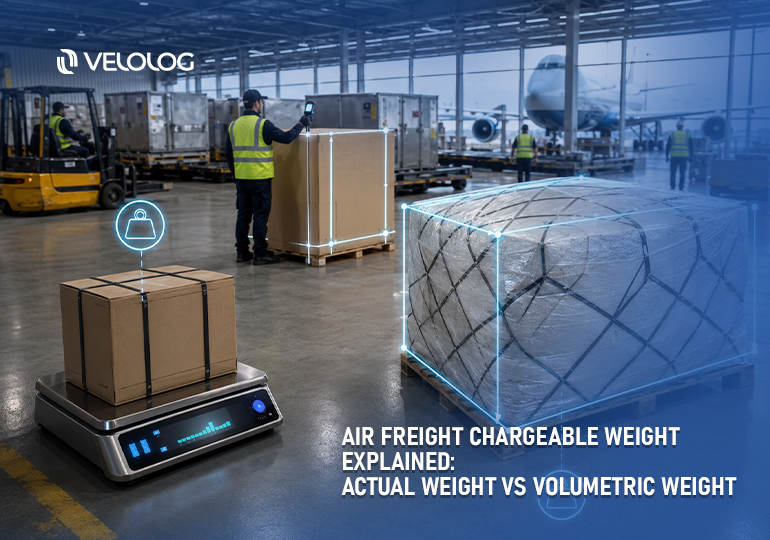
Shipping by air is fast, secure, and reliable, but it comes with a pricing logic that often confuses first-time shippers: air freight chargeable weight. Unlike sea or road freight, where cost is mostly tied to how heavy a shipment is, air cargo pricing depends on whichever is greater between the actual weight of your goods and their volumetric weight. Understanding this concept can help businesses in Saudi Arabia and beyond plan shipments better, avoid billing surprises, and choose the right packaging strategy. In this blog, we break down actual weight vs volumetric weight, explain the volumetric weight formula for air freight, and show you exactly how air freight weight calculation works in practice.
What Is Air Freight Chargeable Weight?
Air freight chargeable weight is the weight that airlines and freight forwarders actually use to calculate your shipping cost. It is not always the same as the weight your shipment shows on a scale. Airlines have limited cargo space, and every aircraft has both a maximum weight capacity and a maximum volume capacity. Because of this, carriers charge based on whichever measurement, actual weight or volumetric weight, takes up more capacity relative to the space it occupies.
This system ensures that airlines are fairly compensated whether a shipment is heavy and compact, like machinery parts, or light and bulky, like packaging foam or textiles. For shippers, understanding chargeable weight is the first step toward controlling logistics costs and avoiding unexpected charges at the time of invoicing.
Actual Weight vs Volumetric Weight: What’s the Difference?
To understand air freight pricing, it helps to separate the two components clearly.
Actual weight is simply the physical weight of your shipment, including the goods and their packaging, as measured on a scale. This is the number most people are familiar with, since it’s the same weight used for other transport modes.
Volumetric weight, also called dimensional weight, is a calculated figure based on the amount of space a shipment occupies inside an aircraft. Even if a package is relatively light, if it takes up a large amount of cargo space, the airline loses the opportunity to carry other paying freight in that same space. Volumetric weight compensates for that lost capacity.
When comparing actual weight vs volumetric weight, the rule is straightforward: the higher of the two numbers becomes the chargeable weight. A dense, compact shipment will usually be billed on actual weight, while a large, lightweight shipment will typically be billed on volumetric weight.
The Volumetric Weight Formula for Air Freight
Calculating volumetric weight requires the dimensions of your shipment: length, width, and height, usually measured in centimeters. The standard volumetric weight formula for air freight used by IATA and most international carriers is:
Volumetric Weight (kg) = (Length x Width x Height in cm) ÷ 6000
This divisor of 6000 is the industry standard for air freight, though it’s worth noting that some couriers and express services may use a different divisor, such as 5000, so it’s always good practice to confirm with your freight forwarder before booking.
For shipments measured in inches, the formula adjusts accordingly, but the principle remains the same: the larger the physical footprint of your cargo, the higher its volumetric weight, regardless of how light the actual contents are.
Step-by-Step Air Freight Weight Calculation
Let’s walk through a simple example of how air freight weight calculation works in practice.
Suppose you have a shipment with the following details:
- Actual weight: 40 kg
- Dimensions: 80 cm x 60 cm x 50 cm
First, calculate the volumetric weight:
80 x 60 x 50 = 240,000 cubic centimeters
240,000 ÷ 6000 = 40 kg
In this case, the actual weight and volumetric weight are equal, so either figure could be used as the chargeable weight. But now consider a lighter, bulkier shipment:
- Actual weight: 25 kg
- Dimensions: 100 cm x 80 cm x 70 cm
100 x 80 x 70 = 560,000 cubic centimeters
560,000 ÷ 6000 = 93.3 kg
Here, the volumetric weight (93.3 kg) far exceeds the actual weight (25 kg). Since airlines charge based on the higher value, this shipment would be billed at 93.3 kg, not 25 kg. This example shows exactly why understanding air freight volumetric weight matters, particularly for businesses shipping lightweight but bulky items such as packaging materials, furniture components, or plastic goods.
Why This Matters for Your Shipping Costs
Many businesses are surprised when an invoice reflects a higher weight than expected. This usually happens because the shipment’s volume, not its actual mass, drove up the cost. For companies regularly moving air cargo, this can have a real impact on budgeting and profit margins if it isn’t accounted for in advance.
Understanding chargeable weight allows shippers to make smarter decisions, such as:
- Optimizing packaging to reduce unnecessary volume without compromising product protection
- Consolidating shipments to make better use of available cargo space
- Comparing air freight versus sea freight for bulky, low-value goods where volumetric charges may make air shipping less cost-effective
- Working with an experienced freight forwarder who can accurately estimate chargeable weight before booking, avoiding last-minute cost surprises
Tips to Manage Volumetric Weight Effectively
A few practical steps can help reduce the impact of volumetric weight on your shipping bills:
- Right-size your packaging. Avoid oversized boxes with excess empty space. Snug, well-fitted packaging reduces both damage risk and volumetric charges.
- Use compression where possible. For soft goods like textiles or foam products, vacuum-sealing or compressing items can significantly reduce their volume.
- Plan shipments in advance. Early planning gives you time to consolidate cargo and choose the most cost-efficient dimensions and routing.
- Get a professional weight and dimension check. A trusted freight partner can measure and calculate chargeable weight accurately before your shipment is booked, so there are no surprises later.
Final Thoughts
Air freight pricing isn’t just about how heavy your shipment is; it’s about how much space it takes up in the sky. By understanding air freight chargeable weight, the difference between actual weight vs volumetric weight, and how to apply the volumetric weight formula for air freight, businesses can plan shipments more accurately and control logistics costs more effectively.
Getting air freight weight calculation right the first time saves money, prevents delays, and builds a smoother, more predictable shipping process, especially for businesses regularly moving cargo in and out of Saudi Arabia and the wider GCC region.
Need Help Calculating Your Air Freight Costs?
At Velolog, our air freight experts handle the calculations, paperwork, and logistics so you don’t have to guess your shipping costs. Whether you’re moving a single pallet or managing regular international shipments, our team will help you optimize packaging, minimize chargeable weight, and get your cargo where it needs to go, on time and on budget.