












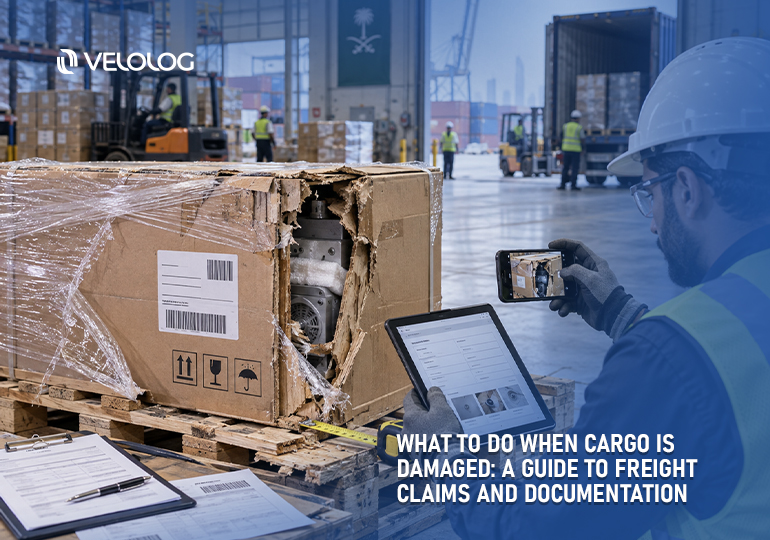
Every shipment leaves the origin with the same expectation: that it arrives in the same condition it left. Most of the time it does. But across long ocean legs, port transfers, road movements through the Gulf and multiple handling points, cargo occasionally arrives crushed, wet, short or broken. When that happens, the difference between a recovered loss and a written-off one usually comes down to what you did in the first few hours after the truck backed up to your dock.
This guide walks through how cargo damage happens, what to do the moment you see it and how to build a freight claim that carriers and insurers can actually approve.
Why Cargo Damage Happens in the First Place
Damage rarely has a single dramatic cause. More often it is the accumulation of small failures across a long chain. Inadequate internal packing lets goods shift inside a carton. Pallets are stacked beyond their crush strength. A container is poorly lashed and cargo migrates during heavy seas. Reefer units drift out of set temperature. Forklift operators working at speed puncture side walls. Moisture condenses inside a steel box crossing from a humid port into a cooler climate and the resulting container rain soaks everything underneath.
In Saudi Arabia, some risks are sharper than elsewhere. Summer temperatures at Dammam, Jeddah and Riyadh dry ports place real stress on adhesives, coatings, electronics, pharmaceuticals and food products. Long inland hauls across desert routes add vibration exposure. Dust intrusion affects sensitive machinery and finished goods. Any shipper moving regularly through these lanes should treat freight damage in Saudi Arabia as a foreseeable operational risk to be planned for not an unlucky accident to be absorbed.
The First Rule: Never Sign a Clean Delivery Receipt
The single most damaging mistake in the entire claims process takes about two seconds. A driver hands over a delivery note, the receiving clerk is busy, and they sign it clean without inspecting the load.
A clean signature is a legal statement that the goods were received in apparent good order. Once it exists, the burden of proving that the damage happened in transit rather than in your own warehouse afterwards shifts almost entirely onto you. Many otherwise valid claims fail at exactly this point.
Inspect before you sign. Walk the pallets, check seal numbers against the documents, count the pieces, look at the corners and the bottom tiers and check for stains, dents, tears, tilt-indicator activations and broken shrink wrap. If anything looks wrong, write it on the delivery receipt in specific language before signing. Note the number of affected cartons, the nature of the damage and the location on the pallet. Vague notes such as “possible damage” carry very little weight. Concrete exceptions such as “4 cartons crushed on bottom tier, pallet 3, water staining on outer wrap” carry a great deal.
If the outer packaging is intact but you suspect the contents are harmed, note the shipment as subject to inspection for concealed damage and open it as soon as possible. Concealed damage has much shorter reporting windows than visible damage, often just a few days.
Building Your Shipping Damage Documentation
Once the exception is recorded, your job is to preserve evidence. Claims are decided on paper, not on phone calls, and strong shipping damage documentation is what separates a paid claim from a denied one.
Photograph the cargo before anything is moved. Capture the load as it sits in the trailer or container, the seal and its number, the exterior of the unit, the damaged packaging from several angles and then the goods themselves once unwrapped. Include a wide shot that establishes context and close shots that show detail. Photographs with visible timestamps are far more persuasive than undated images.
Keep the damaged goods and their original packaging exactly as received. Do not discard, repair, repack or resell anything until the carrier or the insurer’s surveyor has had the chance to inspect. Disposing of evidence early is one of the most common reasons a cargo damage claim collapses, because it makes independent verification impossible.
Assemble the supporting file next. That means the bill of lading or air waybill, the commercial invoice and packing list, the delivery receipt carrying your written exception, an inspection or survey report, temperature logs for reefer cargo, photographs, and a clear calculation of the loss. For repairable goods, obtain a repair quotation. For total losses, show the invoice value plus freight and duties where your terms allow recovery of them. For salvageable goods, document the salvage value you were able to recover, because insurers expect you to mitigate the loss rather than simply claim the full amount.
Filing the Freight Claim
Notice deadlines are strict and vary by mode. Air cargo under the Montreal Convention generally requires written notice of damage within fourteen days of receipt. Ocean shipments under Hague-Visby rules require notice at delivery for apparent damage and within three days for concealed damage. Road carriage under CMR-style terms and most domestic Saudi contracts sets its own windows. Underneath all of these sit longer limitation periods, typically one to two years, for actually bringing a legal action. Miss the notice deadline and the substance of your claim may never be examined.
Your written claim should identify the shipment, describe the damage factually, quantify the loss with supporting invoices and state the amount demanded. Keep the tone professional and evidential. Avoid speculation about who was at fault; let the documents do the arguing.
It is also worth understanding the difference between carrier liability and cargo insurance. Carrier liability is capped by convention or contract and the limits are calculated by weight rather than value, which often falls dramatically short of what your goods are actually worth. A damaged cargo insurance claim under an all-risks marine policy usually recovers the commercial value of the goods plus freight and a margin and settles faster. Many shippers pursue both tracks in parallel, letting the insurer exercise subrogation rights against the carrier afterwards.
Where Your Freight Forwarder Fits In
A capable freight forwarding partner does far more than book space. They advise on packing and stowage before the cargo moves, arrange appropriate insurance cover, monitor the shipment in transit and step in immediately when something goes wrong. When damage occurs, they know which party is actually liable, what the applicable deadline is, how to appoint a surveyor quickly, and how to present freight claims in the format carriers and underwriters expect.
That experience matters. Shippers handling claims alone often lose value simply by missing a filing window or by submitting an incomplete file that gets closed before it is properly assessed.
Talk to Velolog About Protecting Your Cargo
At Velolog, we handle air freight, sea freight, road transportation, customs clearance, project cargo and warehousing across Saudi Arabia and the wider GCC, and we treat cargo protection as part of the service rather than an afterthought. If you are dealing with a damaged shipment right now or you want your next consignment packed, insured and documented so that a claim would actually stand up, our team is ready to help.